Dr. Gymbro
←

#exogenous ketones

2 articles
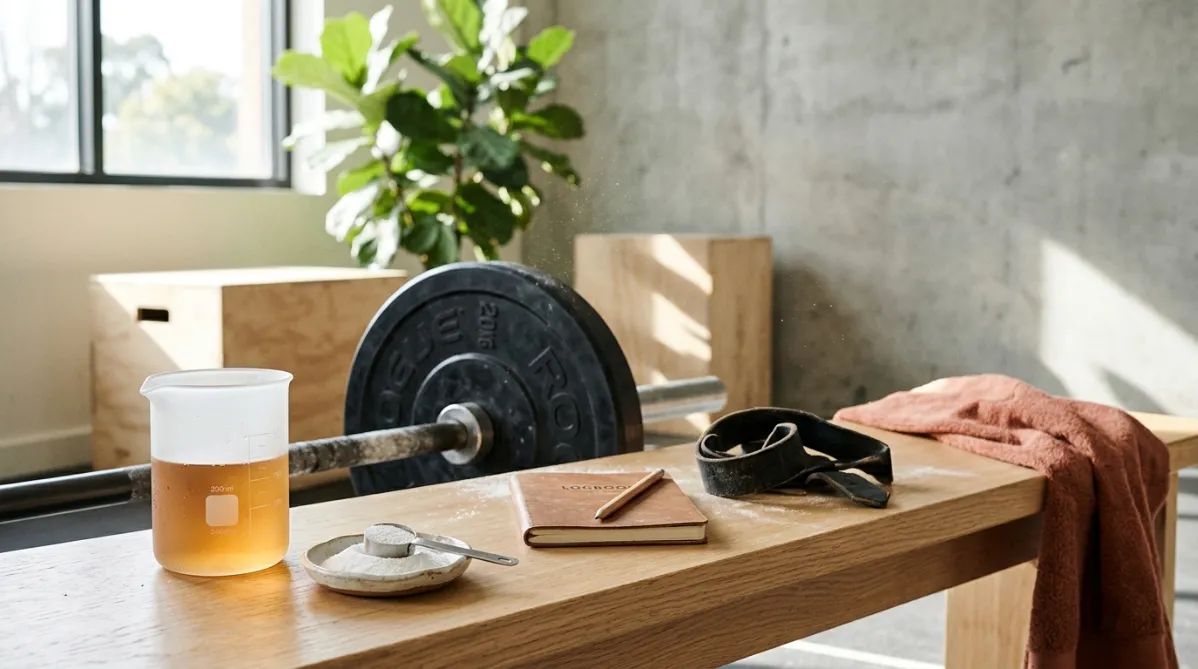
A wide, editorial-style still life shot from a slightly elevated three-quarter angle on a pale oak gym bench, lit by soft morning window light. In the foreground sits a minimalist matte-white glass beaker of clear, faintly amber liquid, with a few condensation droplets on its surface. Beside it rests a small ceramic dish of white crystalline powder and a stainless steel scoop. In the middle ground, a chalk-dusted steel barbell with black bumper plates rests on the bench's edge. A pair of worn leather lifting straps and a small notebook with a pencil lie nearby, suggesting data logging. Behind them, softly blurred, is a bright, airy studio with concrete walls, a wooden plyo box, and a tall leafy plant catching the light.

The palette is warm and muted: cream, sand, soft sage green, and charcoal, with one small accent of burnt orange in the amber liquid and a terracotta towel draped over the bench. Fine chalk dust floats in sunbeams that cut diagonally across the frame. The shallow depth of field keeps the beaker and barbell sharp while the background melts into creamy bokeh. Composition follows the rule of thirds, with the beaker on the left third and generous negative space on the right for headline text. The mood is calm, premium, and contemporary, like a high-end wellness and sports-science magazine photograph with subtle film grain, natural shadows, and realistic textures.
nutrition

Ketony podtrzymały siłę o 8 % wyżej, ale skoki się nie zmieniły

BY DR. GYMBRO ·

Pięćdziesiąt gramów prekursora ketonowego podniosło tempo rozwoju siły o 8 % po godzinie w badaniu Ohio State, ale nie wpłynęło na wysokość skoku. W randomizowanym badaniu z udziałem 20 aktywnych osób poziom ketonów we krwi szczytował się około 2,2 mM po 120 minutach, jednocześnie odnotowano 24 % spadek glukozy i wzrost tętna o 13 uderzeń na minutę. Wynik jest ciekawy dla podnoszących ciężary w powtarzalnych seriach, choć badanie było małe i jednorazowe.

A wide, editorial-style photograph of a runner's morning ritual on a quiet paved path at the edge of a park, shot in soft golden-hour light with a shallow depth of field. In the foreground, a small frosted glass bottle of pale amber liquid sits on a weathered wooden bench, beside a sleek analog stopwatch and a folded linen towel. Condensation beads on the glass and catches warm sunlight. The background melts into a creamy blur of a lone runner in a muted sage-green jacket and charcoal tights, mid-stride, heading away along a tree-lined track, with soft mist hovering above the grass.

The color palette is calm and modern: warm honey and amber tones, soft sage green, off-white, and touches of deep navy in the shadows. Subtle film grain and gentle natural contrast give it a contemporary lifestyle-magazine feel. Long, delicate shadows stretch across the path.

On the bench, a small open notebook with a loose hand-drawn sketch of a head profile and a simple line graph sits next to a pencil, hinting at cognition and measurement without any text legible. A few fallen autumn leaves add texture. The composition follows the rule of thirds, with the bottle and stopwatch on the left third, negative space on the right for headline overlay, and the runner small in the distance to suggest that speed is not the story.

The mood is thoughtful, clean, and quietly intelligent, evoking wellness science journalism: minimal, airy, organic, and refined. No futuristic elements, no neon, no digital effects, just natural light, tactile materials, and a considered, understated aesthetic.
supplements

Ester ketonowy nie przyspieszył biegaczy—ale wyostrzył ich umysły

BY DR. GYMBRO ·

Napoje z esterem ketonowym są reklamowane jako szybka droga do szybszego biegu, ale 31‑dniowe badanie nie wykazało poprawy wyniku na 5 km. Co się jednak zmieniło, było bardzo wyraźne: szybsze reakcje w teście Stroopa i w zadaniu przełączania, spadek glikemii o 15 % oraz wyższy VO₂ w teście stopniowym, nawet po odstawieniu suplementu. Problemem jest mała liczba uczestników – zaledwie 18 rekreacyjnych biegaczy w jednowałkowo ślepym projekcie. Poniżej podsumowuję, co pokazują dane, czego nie mówią i kto powinien zrezygnować z dawki 90 g dziennie.

This page is available in